

A note
Update this thesis with what we just found.
A skill
Write a skill that reruns these earnings checks.
A monitor
Check this again every Monday.
How a proposal works
1
The analyst proposes
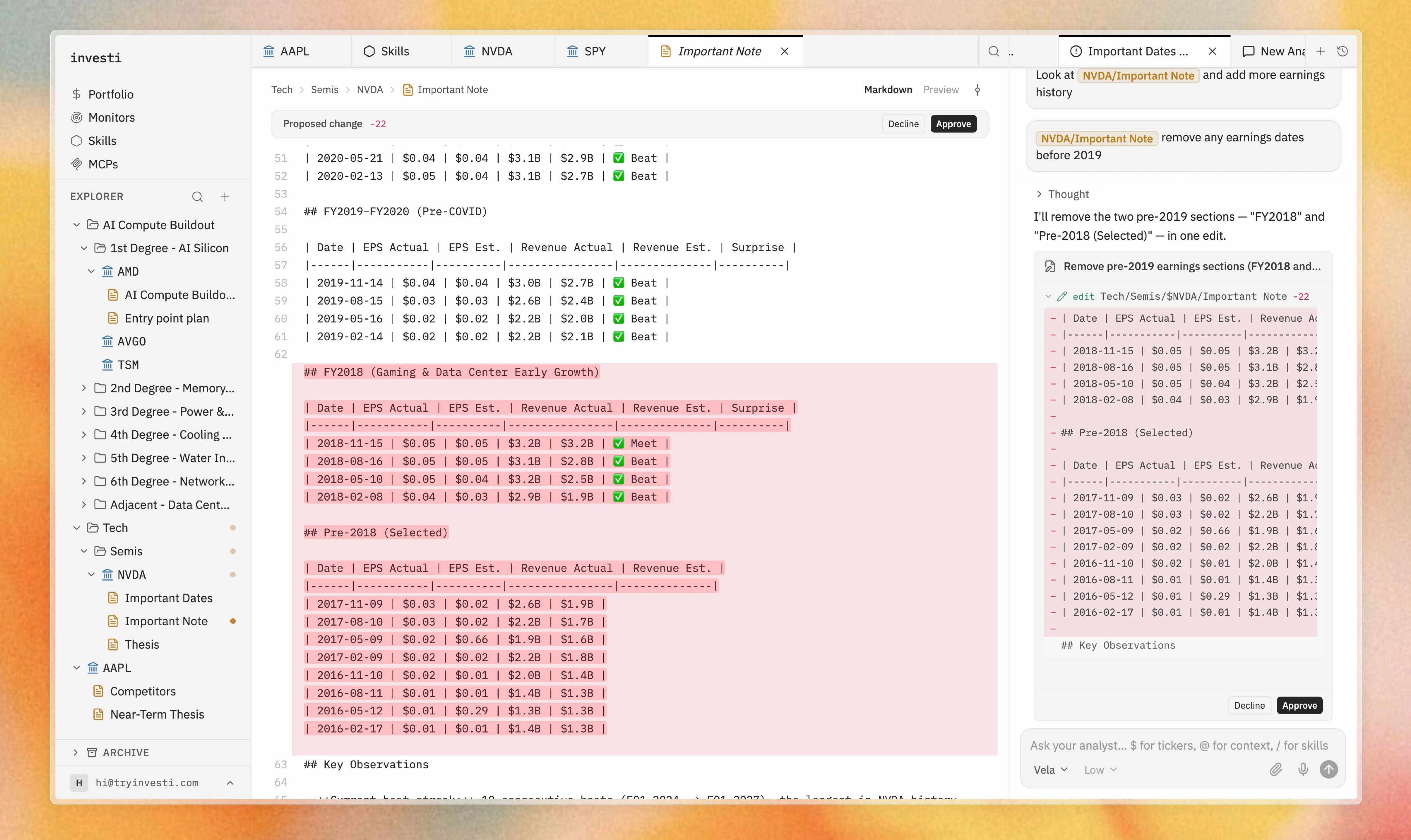
During a conversation, an approval card appears in the chat describing the change. At the same time, the affected note gets a warning-colored dot in the explorer (“Change awaiting approval”), with dimmed dots on its parent folders so you can find it later.
2
You review the diff
Open the note to see a side-by-side diff of exactly what would change: your current text against the proposed text, with a review bar on top. When one proposal is part of a batch, the bar says so (“part of N changes”).
3
Approve or decline
Select Approve to apply the change or Decline to reject it. You can act from the note’s review bar or from the approval card in the chat; the two stay in sync. Approving creates a new revision in the note’s version history, so even accepted changes can be rolled back later.
Why it works this way
Skills and conversations steer how the analyst works, but never what it may change on your behalf. The diff-and-approve flow guarantees that:- You always see the exact change before it lands.
- Your workspace never drifts without your knowledge.
- Every applied change is one revision in history, reversible at any time.